

What matters most is style. The style with which you live, act, fight, and die.
This is what they taught us in those hottest years, fraught with pitfalls and mortal dangers
To remain faithful to Honor and rectitude; to succumb rather than win dishonorably.
Economic, social, and political victory is less important than existential victory.
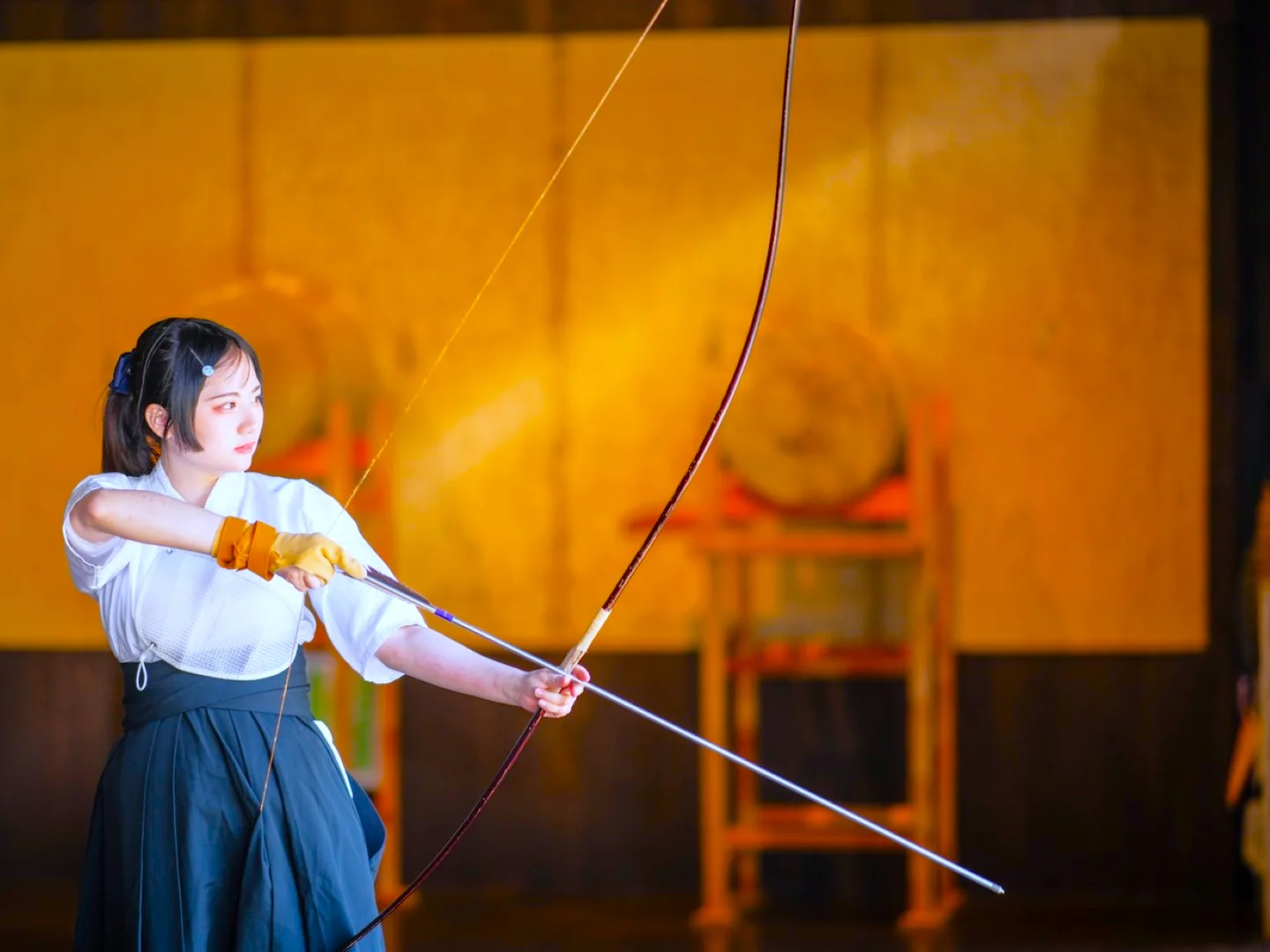
Life is a journey, to put it in Zen terms: life as a bow, the soul as an arrow, the spirit as the target to be pierced.
This, together with a sense of community. A community of growth, not a mere social group, as those that took shape after the “Years of Lead,” when being together was elevated to a mythical form, whereas it was actually a crutch, a refuge, a fallback—not an athanor, an academy, a training ground.
With the advent of “normalization”
those teachings—which are not mere theory but models for action upon oneself—were gradually set aside, often abandoned, and betrayed time and again.
It was mistakenly thought that, in the world of formless quantity, something could be achieved by combining rational formulas—patched-together ones—with the glorification of opinions and cheering from the sidelines.
It was thought—and never was there a greater mistake—that this would make us more concrete, more realistic. Instead, exactly the opposite happened, and the opposite could not but happen, because matter is of the utmost importance, but one must breathe life into it and give it form, and to do this one must begin from there.
It is no coincidence that someone, at the cost of self-sacrifice, once said that the cause needed examples, not men. It is examples that give rise to other men, not opinions, theories, and living from day to day while waiting for Godot.
It is worth reiterating this
because, while we have lived as spectators and cheerleaders—more often than not cheering for the most sordid of causes—the dynamics, the phenomena, have gone their own way and embarked upon a silent revolution that can be perceived in all the crises of today (which, etymologically, are moments of transition). But it still lacks form. And who gives form to matter? The soul that responds to the spirit.
It is always and only a challenge between avant-gardes, and what is still lacking is self-awareness, self-mastery, existential serenity, in that avant-garde which must give a sign and a direction to the silent revolution.
The avant-garde must be formed—formed in the fullest sense of the word.
To do so, one must work on oneself, both individually and communally
in order to recover style and acquire a higher degree of distance from the toxins that infect our lungs and our souls.
We can no longer waste time pursuing mental constructs—highly imprecise ones—that have made so-called “geopolitics,” currency, or Gay Pride into criteria of distinction.
Are we really so degraded that we squabble over such wretched matters? Or are we capable of reconceiving everything by starting from above rather than from below? Because, let us say it with the utmost frankness, the prevailing canons of “political” reasoning and of the dominant disputes are now caricatures of Marxist culture, stripped, however, of the will to power and of the aspiration to scientific rigor that belonged to the latter, before which we have ended up becoming its mirror-image joke.
For years we have been arguing and dividing ourselves
over opinions elevated into truths and dogmas; we do so as spectator-cheerleaders who exalt those they cheer for and attribute to them lofty, artificial, nonexistent expressions.
Ninety-nine times out of a hundred, the person who cheers gets even the object of his cheering wrong; but even if he were to get it right, what remains of him? A dead leaf carried by the wind into something with which he has nothing to do: passive, never active. Not being present to himself, not working on himself, he is often morally wretched as well, incapable of recognizing the greatness of others, petty-minded.
Like a failed communist.
Since we are in the midst of a silent revolution and the times demand it
let us recover that wisdom of a few decades ago: let us return to style, to essence. Becoming requires an axial pivot; matter requires form.
Certainly, merely standing upright is not enough—which is itself a great, very great, very great undertaking—but it is indispensable.
A few, as has always been the case throughout the history of a world that is neither egalitarian nor democratic, may also dictate the lines of action and the projects. On this we may differ, but we must at least be equal to the task: almost no one is, and the democratic presumption that has become epidemic means that very few ask themselves: “Who am I? What do I know? What have I done? What experience do I have that entitles me to point to solutions?” Time wasted that could have been spent on one’s own growth!
Humility is required, and with it self-discipline, style, and autonomy:
then the silent revolution may begin to take shape. There is no need to ask ourselves how; it will happen through empathy, through synergy, through a subtle yet irresistible energy.
What matters is to (re)embark upon the right course of conduct, because everything in the world is hierarchical; one must aim to pierce through the spirit so that from it we may receive the energy that gives form to regeneration.


